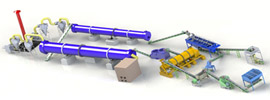
Design of a Large-Scale Organic Fertilizer Plant
I. Site Selection and Layout
- Geographical Location:
- Choose a location with convenient transportation, close to raw material sources (such as livestock and poultry farms, agricultural waste collection points) and product sales markets.
- Avoid selecting sites in environmentally sensitive areas, such as residential zones, water source protection areas, and scenic spots.
- Topography and Geomorphology:
- Prioritize flat terrain with good drainage for easy construction of factories and equipment placement.
- Consider geological conditions to ensure a stable foundation and avoid geological hazard risks.
- Plant Layout:
- Based on the production process, reasonably divide the plant area into raw material storage, pre-treatment, fermentation, post-treatment, finished product storage, office, and living quarters.
- Set up reasonable logistics and fire lanes between different areas to ensure smooth material transportation and safety.
- Consider wind direction and sunlight conditions, placing fermentation areas (which may generate odors) downwind and office and living quarters upwind.
II. Raw Material Processing System Design
- Raw Material Reception and Storage:
- Construct a raw material receiving station equipped with weighing and unloading devices for rapid reception and measurement of raw materials.
- Build different types of raw material storage facilities, such as enclosed warehouses and open storage yards, based on the type and characteristics of raw materials to ensure safe storage.
- Raw Material Pre-treatment:
- Design appropriate pre-treatment processes, such as crushing, screening, and mixing, for different raw materials to improve their uniformity and fermentation efficiency.
- Equip with necessary pre-treatment equipment, such as crushers, screeners, and mixers.
III. Fermentation System Design
- Fermentation Process Selection:
- Choose an appropriate fermentation process based on raw material characteristics and product requirements, such as windrow fermentation, trench fermentation, or tank fermentation.
- Large-scale organic fertilizer plants typically adopt trench or tank fermentation processes to improve fermentation efficiency and product quality.
- Fermentation Equipment Configuration:
- For trench fermentation, construct fermentation trenches and equip them with turners and ventilation devices to achieve uniform fermentation and oxygen supply.
- For tank fermentation, build fermentation tanks and equip them with stirring devices and temperature control systems for rapid fermentation and temperature regulation.
- Fermentation Process Control:
- Install monitoring equipment for temperature, humidity, and oxygen content to monitor fermentation process parameters in real-time.
- Adjust turning frequency and ventilation volume based on monitoring results to ensure stable fermentation.
IV. Post-treatment System Design
- Screening and Crushing:
- After fermentation, screen the material to separate large impurities and incompletely fermented raw materials.
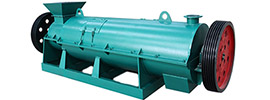
- Crush the screened material to meet the particle size requirements of the finished product.
- Granulation and Drying:
- Choose an appropriate granulation process based on product requirements, such as disc granulation or drum granulation.
- Equip with drying equipment, such as rotary dryers or fluidized bed dryers, to reduce the moisture content of the finished product and improve its stability.
- Cooling and Packaging:
- Cool the dried finished product to avoid clumping during high-temperature packaging.
- Equip with packaging equipment, such as automatic packaging machines and sewing machines, for automated packaging and storage of finished products.
V. Environmental Protection and Energy Conservation Design
- Exhaust Gas Treatment:
- Collect and treat exhaust gases generated during the fermentation process to prevent environmental pollution.
- Adopt exhaust gas treatment technologies, such as biofilters or activated carbon adsorption, to ensure达标 (meet standards) emissions.
- Wastewater Treatment:
- Collect and treat wastewater generated during production for recycling or达标 (compliant) discharge.
- Use wastewater treatment processes, such as sedimentation, filtration, and biological treatment, to reduce pollutant content in wastewater.
- Energy Conservation Design:
- Select energy-efficient equipment, such as variable frequency drive motors and energy-saving dryers, to reduce energy consumption.
- Optimize the production process to minimize material handling and energy loss, improving energy utilization efficiency.
VI. Automation and Intelligence Design
- Automation Control System:
- Adopt automation control systems, such as PLC (Programmable Logic Controller) or DCS (Distributed Control System), for automated control of the production process.
- Through automation control systems, real-time monitoring of production parameters, adjustment of equipment operating status, and improvement of production efficiency can be achieved.
- Intelligent Management:
- Introduce intelligent management systems, such as ERP (Enterprise Resource Planning) and MES (Manufacturing Execution System), for information-based and intelligent production management.
- Through intelligent management systems, production plans can be optimized, production efficiency improved, and production costs reduced.
VII. Safety and Fire Protection Design
- Safety Design:
- Comply with national safety regulations and standards to ensure safety during production.
- Equip with necessary safety protection facilities, such as guardrails and safety warning signs.
- Provide safety training and education to employees to enhance their safety awareness and operational skills.
- Fire Protection Design:
- Comply with national fire protection regulations and standards to ensure fire safety in the plant area.
- Equip with necessary fire protection facilities, such as fire hydrants, fire extinguishers, and fire alarm systems.
- Conduct regular fire drills and inspections to ensure the good condition and effectiveness of fire protection facilities.





 Send us a Email
 Wulong Industrial Cluster
 Have any question?